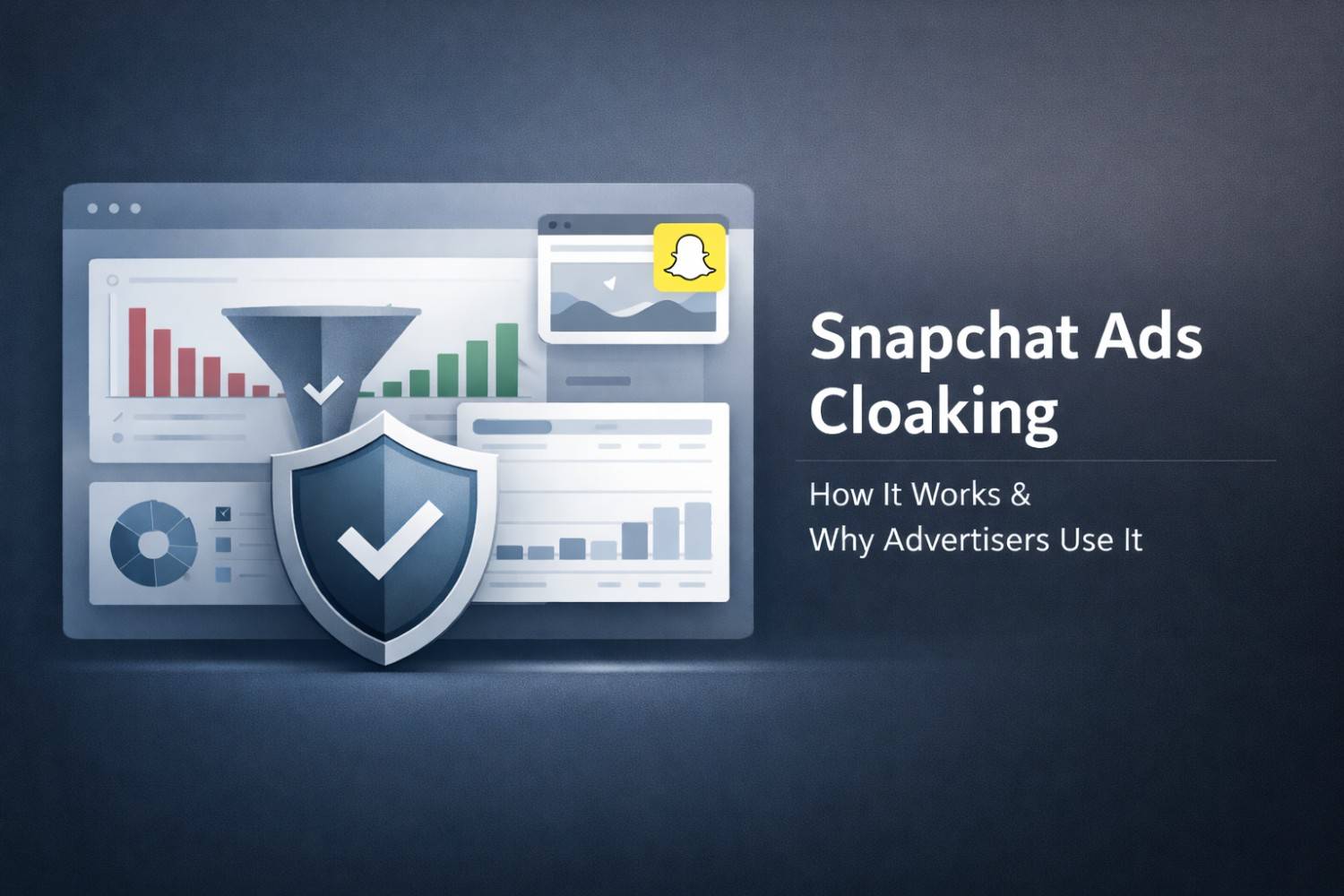
Snapchat has become a strong advertising platform for reaching younger audiences. Many advertisers run into strict ad review rules that block or reject campaigns. This is where snapchat ads cloaking comes into use.
Snapchat ads cloaking is a method used to show different content to Snapchat reviewers and real users. It helps advertisers manage ad approvals while running campaigns in competitive or restricted niches.
What Is Snapchat Ads Cloaking?
Snapchat ads cloaking is a filtering system that detects who is visiting your landing page. Based on the visitor type, it shows different versions of the page.
- Reviewers see a clean, policy-friendly page
- Real users see the actual offer or content
This process helps control how ads are reviewed and how traffic is handled after approval.
How Cloaking for Snapchat Ads Works
The process behind cloaking for snapchat ads is based on traffic filtering and redirection.
Step-by-Step Working process
- User clicks on Snapchat ad
- Traffic goes through a cloaking system
- System checks IP address, device, and behavior
- If visitor is a bot or reviewer → safe page shown
- If visitor is real → main landing page shown
Advanced cloaking setups also use:
- User-agent detection
- ISP filtering
- Geo-targeting
- Device fingerprinting
This makes cloaking snapchat ads more precise and harder to detect.
Why Advertisers Use Snapchat Ads Cloaking
Many advertisers face repeated ad rejections. Common reasons include strict policies and automated detection systems.
Key reasons for using cloaking:
- Avoid frequent ad disapproval
- Run campaigns in restricted niches
- Protect landing pages from review bots
- Improve campaign stability
- Scale ads without interruptions
For affiliate marketers and performance advertisers, cloaking often becomes part of campaign strategy.
Common Issues Without Cloaking
Running ads without a filtering system can lead to:
- High rejection rates
- Account suspension risk
- Low ROI due to limited reach
- Flagged domains
Snapchat uses automated systems to scan landing pages. Without cloaking, even small issues can lead to ad disapproval.
Best Practices for Snapchat Ads Cloaking
- Use Clean Landing Pages – Always maintain a compliant version of your landing page for review traffic.
- Fast Redirect Speed – Slow redirects can expose your cloaking system. Keep response time low.
- Avoid Flagged Domains – Use fresh domains with no history of violations.
- Update Filtering Rules – Snapchat updates its detection systems often. Keep your cloaking rules updated.
- Track Traffic Properly – Use tracking tools to monitor real users and bot traffic.
Risks of Cloaking Snapchat Ads
While effective, cloaking carries risks:
- Ad account bans
- Domain blacklisting
- Loss of ad spend
- Platform policy violations
Advertisers should understand these risks before using cloaking methods.
Snapchat Ads Cloaking vs Other Platforms
Compared to other platforms, Snapchat has:
- Moderate detection systems
- Faster approval cycles
- Less aggressive scanning than some networks
This makes Snapchat attractive for advertisers testing new campaigns.
Final Thoughts
Snapchat ads cloaking is widely used by advertisers who want more control over ad approvals and campaign performance. By filtering traffic and separating reviewers from real users, it helps improve stability and scaling.
However, success depends on proper setup, fast infrastructure, and updated filtering rules. Poor implementation can lead to account issues and campaign failure.
For long-term results, focus on clean setup, testing, and consistent optimization.