What Is Google Ads Cloaking?
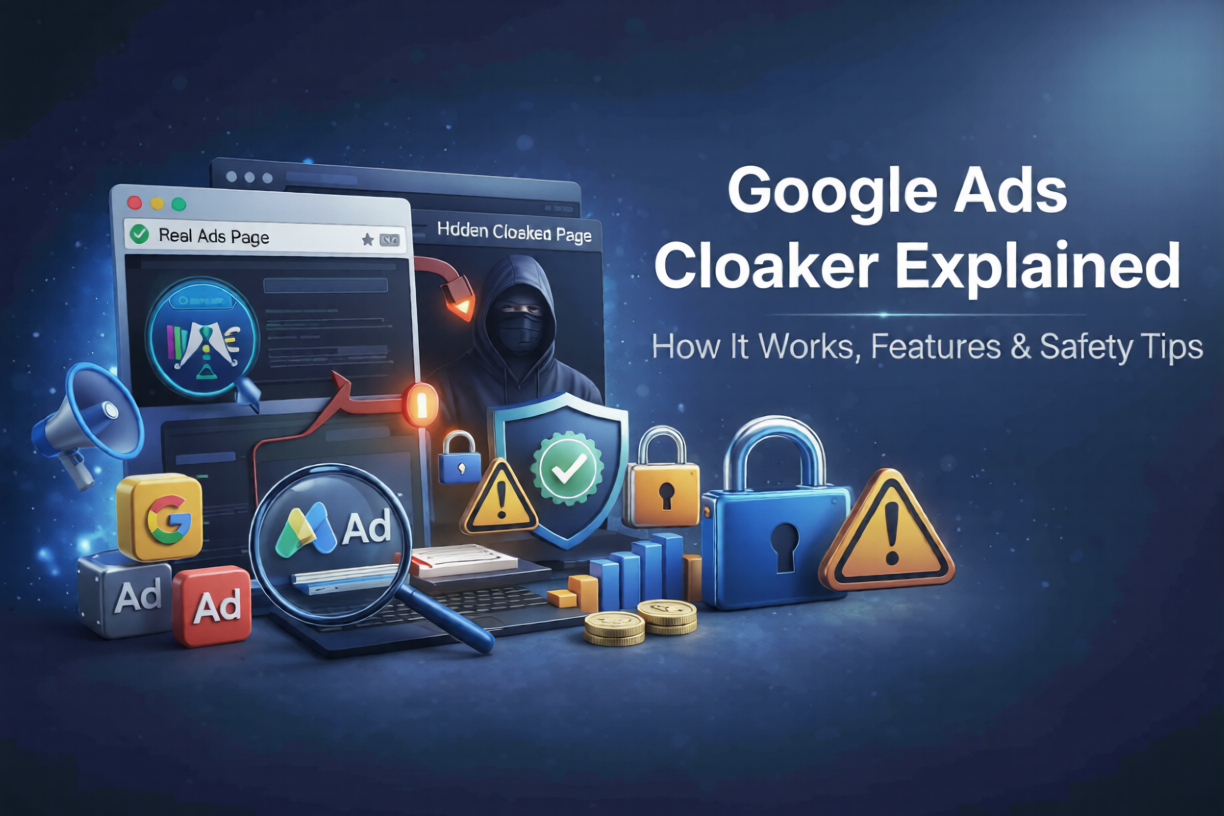
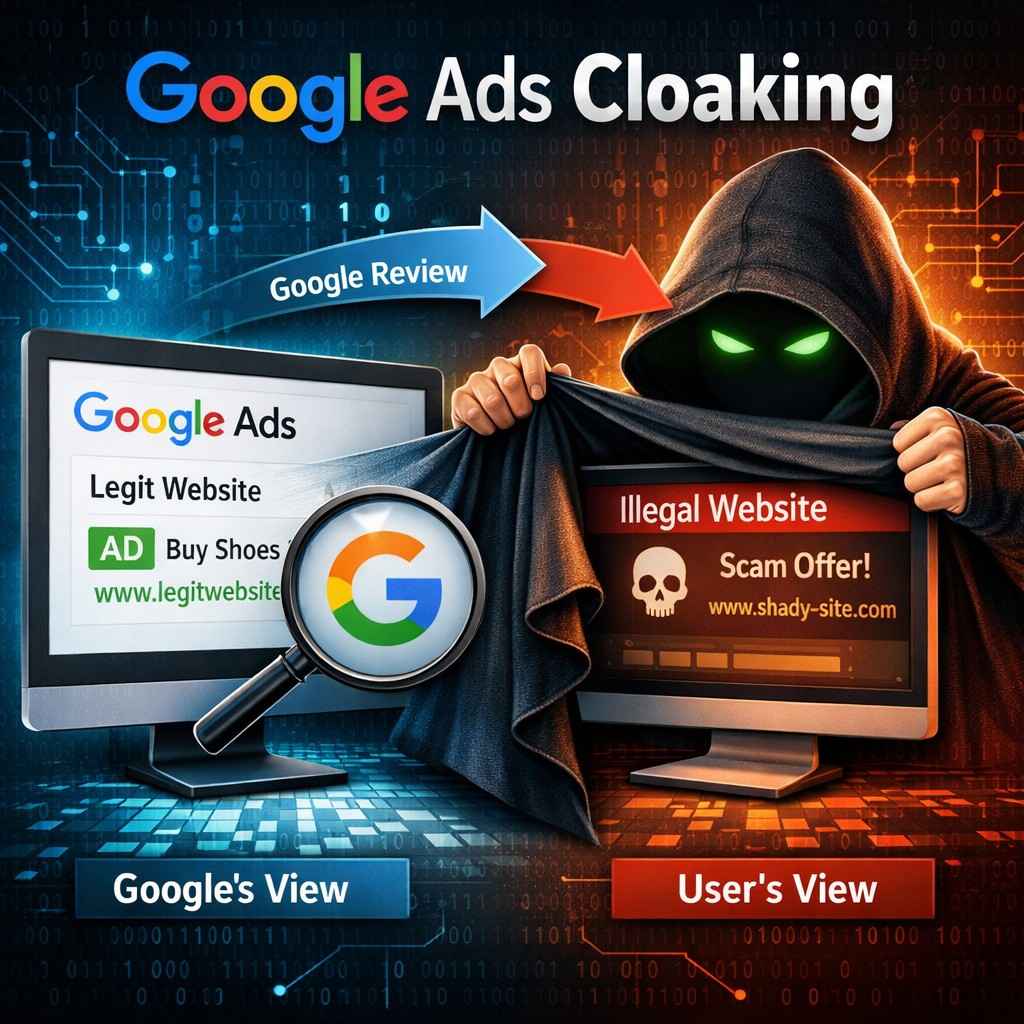
Google Ads cloaking is an advanced technique where your actual content is hidden from ad reviewers, and the real content you want to show is displayed only to targeted users. This system works based on filters like IP address, device type, and location.
On Google Ads, even a small mistake can lead to your campaign being rejected. Cloaking is often used by affiliate marketers, media buyers, or those running fraudulent offers who try to bypass the ad review system.
To understand how this process works:
- After ad review, creatives (images, videos, or text) or URLs are manually changed
- Or, by using a dynamic script, the content is changed based on the user’s location, device, or browser
This article will help you understand how ad cloaking works so you can choose the right ad security service.
To understand how this process works:
- After ad review, creatives (images, videos, or text) or URLs are manually changed
- Or, by using a dynamic script, the content is changed based on the user’s location, device, or browser
This article will help you understand how ad cloaking works so you can choose the right ad security service.
How Ad Cloaking System Works
The ads cloaking system works by analyzing incoming traffic in real time. When someone clicks on an ad, it identifies whether the person clicking is a Google bot or moderator, or a normal user.
How cloaking technology works:
- IP Filtering – It checks the visitor’s IP address. This helps block traffic coming from ad networks, bots, or suspicious sources, so only selected users are allowed.
- User-Agent Detection – It reads browser and device information (user-agent). This helps identify whether the visitor is a bot, moderator, or real user.
- Referral Tracking – It checks where the traffic is coming from, such as search engines, ads, or direct visits. Based on this, it decides how to handle each visitor.
- Fingerprinting Technology – This is an advanced method that uses multiple signals (device, browser, behavior) to identify users more accurately and separate bots from real users.
This process is fully automated and depends on filter rules. Advanced systems also track behavior patterns to improve accuracy.
Types of Cloaking
1. IP-Based Cloaking – Content changes based on the visitor’s IP address. Different users see different pages depending on location or source.
2. User-Agent Cloaking – The system detects the browser or bot. Search engine crawlers and real users are shown different content.
3. JavaScript Cloaking – Content is controlled using JavaScript. Users with enabled scripts may see different content than bots.
4. Referral Cloaking – Pages change based on where the visitor comes from, such as search engines, ads, or direct traffic.
5. Geo-Targeting Cloaking – Content is displayed based on the user’s country or region.
Important Factors for Choosing a Google Ads Cloaker in 2026
Choosing the best Google Ads cloaking service depends on multiple factors. Not all tools work the same.
Key things to check:
- Advanced filtering system – Ability to filter IP, VPN, proxy traffic
- Geo-targeting control – Show content based on location
- Device-level filtering – Different rules for mobile and desktop
- Speed and uptime – Fast response without delay
- Ease of setup – Simple dashboard for quick use
- Support quality – Fast help when issues happen
A good cloaker should give full control over traffic and work smoothly without affecting campaign performance.
How TrafficGuardian Handles Google Ads Cloaking
TrafficGuardian is known for strong traffic filtering and real-time control. It focuses on identifying low-quality traffic and managing how visitors interact with your pages.
Main features include:
- Real-time bot detection
- Advanced IP and device filtering
- Clean traffic routing
- Easy dashboard for rule setup
Many advertisers use it to improve campaign stability and reduce unwanted traffic issues.
Why Our Google Cloaking Services Are Trusted
Businesses look for trusted solutions when dealing with ad campaigns. A trusted cloaking setup should focus on performance and consistency.
Reasons why services are trusted:
- Accurate traffic filtering
- Stable campaign performance
- Easy integration with ad platforms
- Regular updates for new detection systems
- Support for beginners and advanced users
Trust is built when campaigns run smoothly without frequent disruptions.
Best Practices for Google Ads Cloaking
To get better results and reduce risks, follow these best practices:
- Use clean and fast-loading landing pages
- Set filters carefully (IP, geo, device)
- Avoid over-complicated setups
- Monitor traffic regularly
- Test different configurations
- Keep your domain and hosting stable
Proper setup is more important than the tool itself. Even the best cloaker will not work well if filters are incorrect.