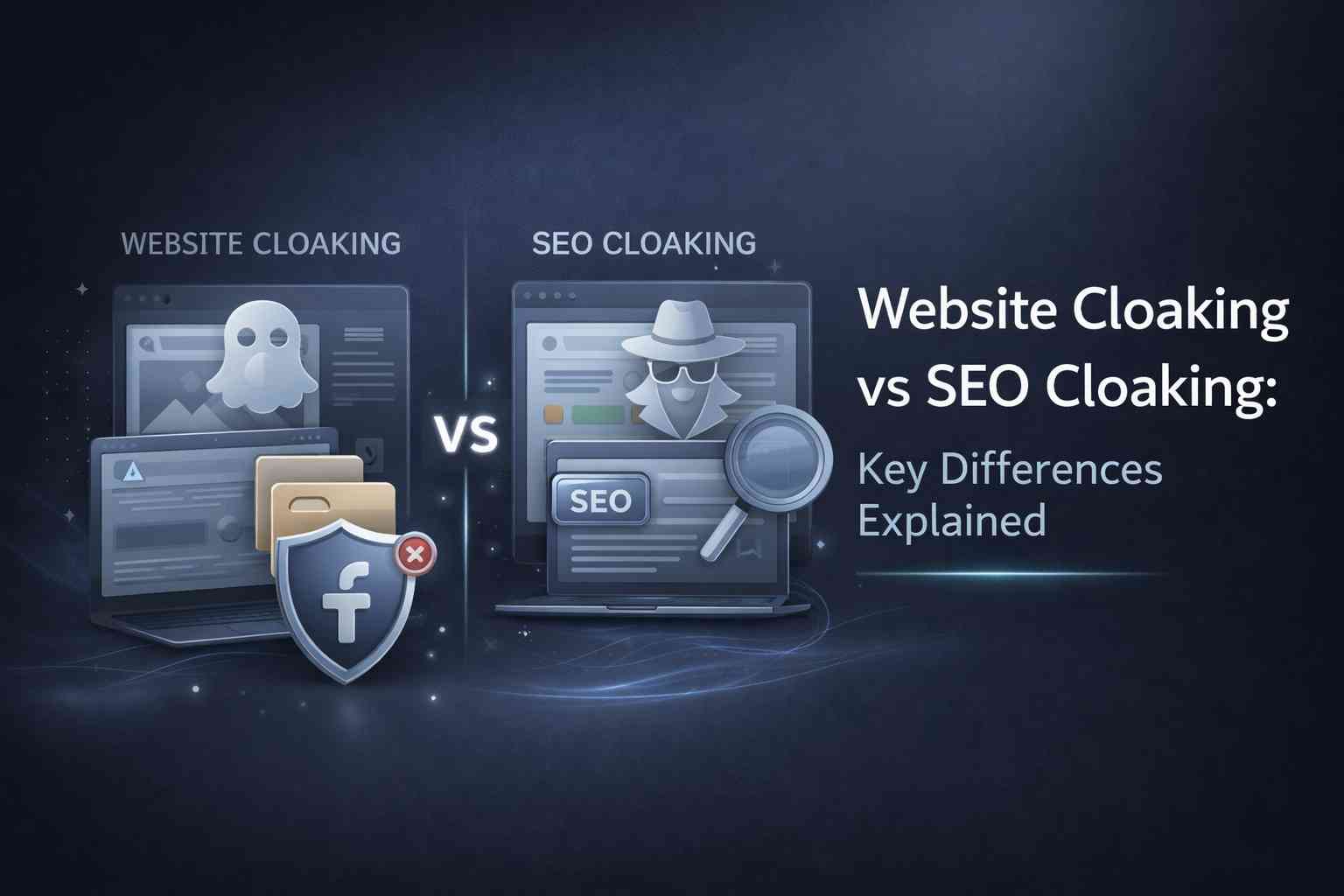
Getting to Know Ad Cloaking
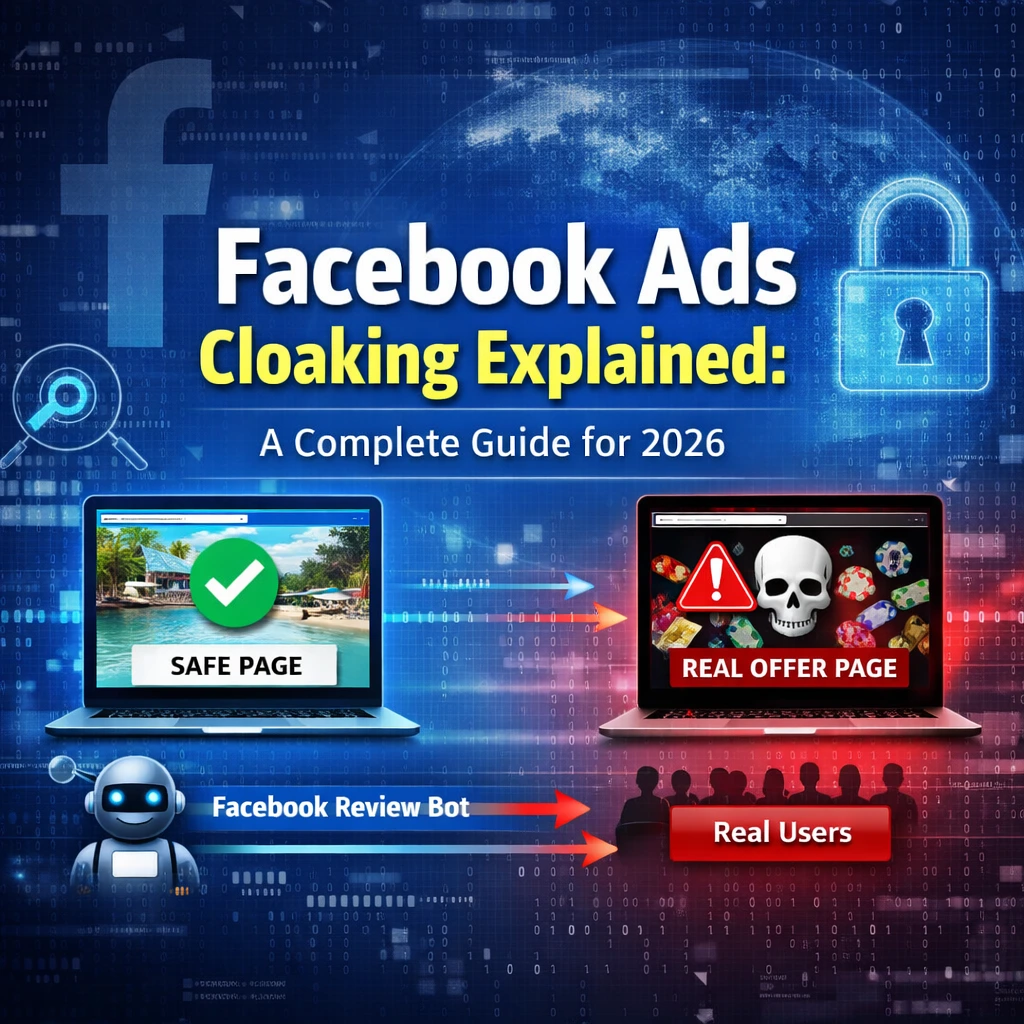
Ad cloaking helps marketers run campaigns on Google Ads, Meta, Bing, TikTok, and other platforms. Due to strict rules, many offers in niches like crypto, gambling, CBD, supplements, and finance get blocked or disapproved. With ad cloaking, bots are shown safe content, while real users see the actual offer. This helps ads stay live longer and protects accounts from quick bans.
Safe Page: A clean, rule-compliant page shown to bots and reviewers (e.g., articles or informational pages).
Money Page : The real offer page shown to genuine users for conversions (e.g., crypto sign-up).
People search for ad cloaking services because platforms detect violations very fast. A good service works like a filter it checks every click and decides which page should load. White pages (safe pages) show general information, blogs, or compliant landing pages to pass reviews. Money pages (or black pages) display the real promotion, such as sign-up forms or product sales.
In 2026, top tools include TrafficGuardian, which provides cloaking across multiple platforms with strong bot blocking. Other tools like TrafficShield, TrustCloaker, and NoIPFraud offer AI filters, JavaScript fingerprinting, and geo/device checks. These are more effective than basic IP blocking because they can detect proxies, VPNs, spy tools such as AdPlexity and Anstrex, as well as moderator behavior patterns.
Marketers use ad cloaking to grow in restricted niches. It reduces fake clicks, saves ad spend, and improves ROI. However, platforms like Google classify it as “circumventing systems,” and accounts may be suspended if detected. Smart users warm accounts gradually and mix white-hat traffic first.
How Does Ad Cloaking Work?
Ad cloaking starts when a user clicks your ad. The cloaker (script or cloud tool) grabs details like IP, user-agent, device fingerprint, location, referrer, and behavior. It compares against blacklists of known bots, data centers, spy services, and review IPs.
If the visitor looks suspicious (bot, moderator, or from a flagged range), it loads the white page. This page matches the ad creative educational content, news-style articles, or blank pages that follow policies. Reviewers approve because everything looks clean.
For real humans (good IPs, normal devices, natural behavior), it redirects or loads the money page. This shows the restricted offer without issues. The switch happens in milliseconds no delays for users.
Setup involves:
- Hosting white pages on separate domains.
- Linking the cloaker to your ad landing URL.
- Setting rules: geo-blocks (e.g., avoid reviewer countries), device filters, or AI scoring.
- Monitoring logs to tweak filters.
Advanced services use machine learning for better accuracy. They block TOR, mobile proxies, and antivirus scanners. Some add API for trackers like Voluum or Binom.
In practice, run small tests first. Start with whitehat ads to build trust, then layer cloaking. This method extends campaigns on Google, Meta, Bing, and more.
What Things Should Keep in Mind While Doing Ads Cloaking?
- Choose a proven ad cloaking service avoid free or cheap ones that get detected fast. Look for regular updates, strong fingerprinting, and support for your platforms.
- Test setups carefully. Run low-volume traffic to spot errors. Check for blocked real users (high bounce rates hurt). Use unique white pages per account to avoid patterns.
- Warm accounts: Spend $50–$150 on clean ads first. Scale slowly to mimic natural growth.
- Track everything clicks, conversions, bans. Adjust rules based on logs.
- Diversify: Don’t rely on one platform or tool. Have backup accounts and domains.
- Stay updated on policies. Google and Meta improve detection yearly. What worked last month may fail now.
- Risks exist permanent bans happen. Use ethically for edge cases, not outright fraud.
- Budget wisely: Paid services cost $100–1000/month but save more in ad spend.
- Pick one with good support and community feedback from forums like BlackHatWorld or Reddit.
Circumventing Systems – Advertising Policies Help
Platforms ban cloaking under “circumventing systems” rules. Google suspends accounts for showing different content to reviewers vs. users. Meta calls it subverting moderation.
Yet many run successfully by blending compliance. Craft white pages close to your theme e.g., “Learn about blockchain” for crypto offers. Avoid extreme mismatches.
Use cloaking to test markets without instant rejection. It helps restricted businesses get approvals faster.
For best results, combine with clean creatives, gradual scaling, and multiple accounts. Services like Adspect or Cloakerz claim high success in 2026 by outsmarting AI detectors.Ad cloaking isn’t risk-free, but done right, it opens doors in competitive spaces. Explore trusted ads cloaking options, learn how to work ads cloaking properly, and monitor changes to stay ahead.